“Mom, look here, my nose is bleeding,” Dennis called out to his mother. With little energy left in him, the boy lay outside next to the wall of their thatched mud house as his mother tended to him the best way she could. Dennis had been sick for days and showed no signs of recovery despite treatment at the local health center.
A boy once vibrant and full of life was now confined to his home in the dry, remote village of the northern region of Turkana, unable to go about his daily routine of herding goats. His mother recalled that the illness began with a persistent headache, followed by nosebleeds, loss of appetite, and fever. Over time, the symptoms worsened, forcing her to take him back to the Turkwel Health Center, where clinicians investigated further and found that Dennis had Kala-azar.
Understanding Kala-azar and Its Reach
Kala-azar is a Neglected Tropical Disease (NTD) transmitted by infected female sandflies. It causes fever, weight loss, and enlargement of the spleen and liver, and it is fatal if left untreated.
In Kenya, as in most places where Kala-azar is endemic, the disease largely affects marginalized, poor rural communities in arid and semi-arid regions. Turkana, West Pokot, Wajir, Marsabit, and Isiolo counties account for 86.8% of the country’s burden and represent some of the regions with the highest Kala-azar cases in Kenya, according to a recent study by the Center for Epidemiological Modelling and Analysis (CEMA), the Ministry of Health, and partners.
Granular data from the study shows that Laisamis in Marsabit has the highest Kala-azar incidence rate of 20.9 cases per 10,000 people, followed by Eldas in Wajir (19.1), Wajir West (18.5), Merti in Isiolo (17.5), Pokot Central in West Pokot (16.7), Tiaty East (12.1), and Lokiriama (10.7) in Turkana.
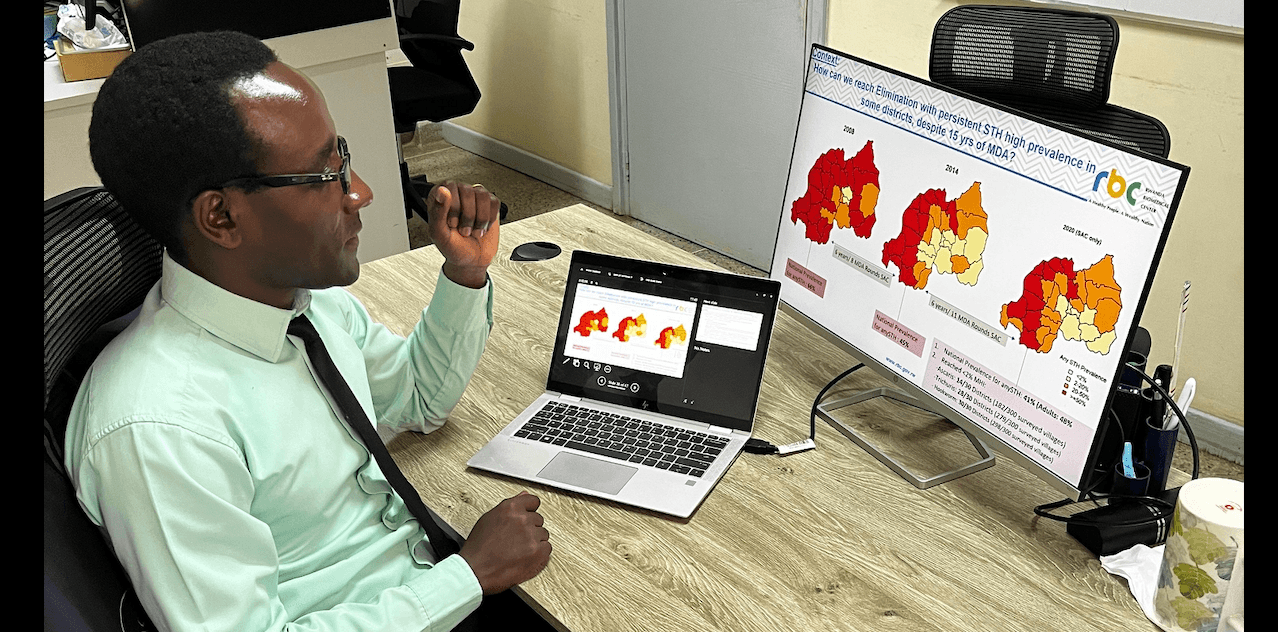
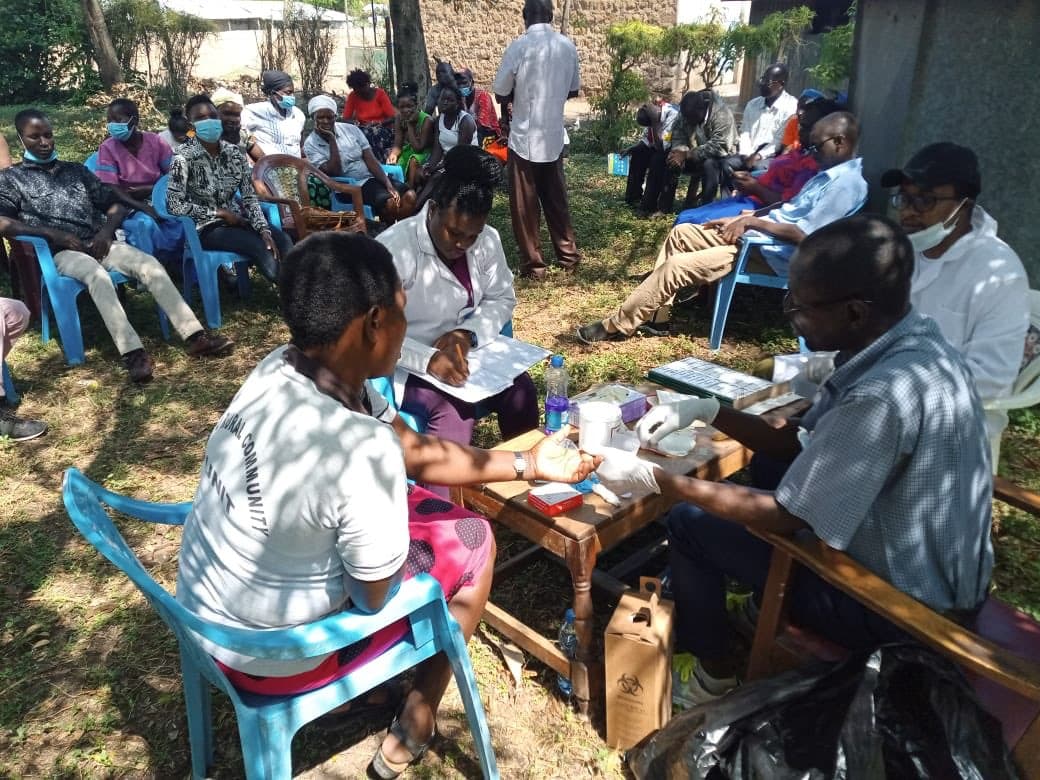
“We have documented cases from health-facility-related data, this is data that comes from patients who visit hospitals and are treated for visceral leishmaniasis. From the dataset, we have about 22 counties, 80 sub‑counties, and about 184 wards,” said Dr. George Paul Omondi, Senior Research Fellow at CEMA. “However, the important thing to note is that only about 13 counties have had a continuous presence of the disease from 2017 to 2025.”
Mapping the Risk
Ward-level data paints a clearer picture on the ground, showing that the top 20 wards accounted for roughly 60% of cases between 2017 and 2025. From 2023 onward, 18 high‑burden wards accounted for about 44% of cases. The study classified wards into categories of very high burden (more than 15 cases per 10,000 people), moderate, low, and very low, noting that roughly 73 wards, only a small fraction of all wards, require intensive intervention if Kenya is to move meaningfully toward elimination.
Village‑level maps make the picture more vivid, revealing pockets of extreme risk in certain parts of Wajir, Isiolo, Marsabit, and West Pokot, as well as newly affected areas like Tharaka Nithi, Meru, Kajiado, and Kitui. This fine‑scale view is essential for deciding where to place vector surveillance, which villages to monitor most closely, and how to overlay information about humans, animals, and the environment.
“This kind of granularity allows us to start asking which villages are at risk and in need the most and where we can conduct vector surveillance,” Omondi said. “Those are the most important places to start following the dynamics.”
Ecological Drivers and Spread
The presence of Kala-azar in Kenya was not always so widespread. It was first reported in Mandera and Wajir in 1935, before cases were reported in the Rift Valley areas of Baringo and West Pokot around the 80s and 90s. At the start of 2000, prevalence grew across the country as Kala-azar spread to areas where it was not previously present, most recently Tharaka Nithi and Meru.
This spread is not random; it follows ecology. Omondi notes that because 80% of Kenya is rangeland, much of the country shares similar ecologies, though differences exist in soil type and environmental variables. The ecological drivers supporting the disease in arid areas include vertisols (black cotton soil), termite mounds, and climatic expansion, which is leading to an upward trend. Similar ecologies, such as those shared between Kajiado and Narok or Isiolo and parts of Meru, signal where the disease could emerge next.
“Then we also have housing, especially the manyattas, the environment, livestock, and the large number of dogs. Because of the wildlife we have, especially the hyrax, we are also starting to think about the potential for zoonotic transmission,” said Omondi.
Demographics and Diagnosis
Demographically, Kala-azar skews heavily toward males and children. Roughly two‑thirds of cases are in males, and a similar proportion are in those under 14 years of age. Around one‑fifth of cases occur in children under two, who likely acquire the infection in or immediately around the household. As children grow older and assume household chores like grazing, cases again cluster in these age bands, mirroring exposure behavior. Herders like Dennis, constantly outdoors in vector‑rich environments, are at particularly high risk of sandfly bites.
Clinically, about 88% of patients present with fever, and around 63% have the combination of fever plus an enlarged spleen (splenomegaly) or enlarged liver (hepatomegaly) that underpins the national case definition. Rapid diagnostic tests work fairly well in symptomatic patients but perform less well for those who are asymptomatic. For many families in remote areas, Kala-azar often appears as a mysterious “unknown” illness, causing deep anxiety until it is finally recognized.
The Path Forward
The consequences of infection are serious, especially when compounded by malnutrition, HIV, or tuberculosis. Case fatality is highest among children under two and adults over 24. While the overall case fatality rate is relatively low, it has been creeping upward, peaking at around 3.4% in 2025. Kenya, together with Brazil, India, Ethiopia, Sudan, South Sudan, and Somalia, carries about 80% of the global burden.
If nothing major changes, Kenya could see around 25,000 Kala-azar cases over the next decade. Dr. Omondi suggests that treatment alone has limited impact on transmission. To make elimination possible, Kenya would need to achieve at least 90% coverage with integrated interventions, including insecticide‑treated nets (ITNs) and indoor residual spraying (IRS), and sustain this for five to ten years.
He proposes a programmatic stratification where counties and wards are grouped by incidence rates, with each band receiving a tailored package of interventions. This includes social and behavior change communication, training for healthcare workers, and surveillance in new ecological risk zones.
Elimination of Kala-azar in Kenya is achievable, but it requires accepting that this is a carefully charted journey rather than a short sprint. By building sustained, integrated coverage and tackling the pool of asymptomatic infections, Kenya can realistically move toward a future where children like Dennis are safe from the threat of the disease.
'I was scared when he was diagnosed with Kala-azar; I wasn't sure how it was treated,' recalled his mother, seated next to Dennis at their home. 'But he started getting well immediately after he received the medicine. After seven days his fever went down, he started eating, his nosebleeds stopped, and his face brightened.'
Dennis's story was shared courtesy of EndFund